WalkingPad Z1 vs WalkingPad P1
As an Amazon Associate we earn from qualifying purchases. This does not change which products are recommended. Disclosure.
Choose the WalkingPad Z1 for most homes. It is 5 kg lighter at 23 kg, rated 10 kg higher at 110 kg, lower when flat at 10.6 cm and has a brushless motor. The P1 makes sense only if you want its automatic speed mode or its 0.5 km/h minimum, and you are well under 100 kg.
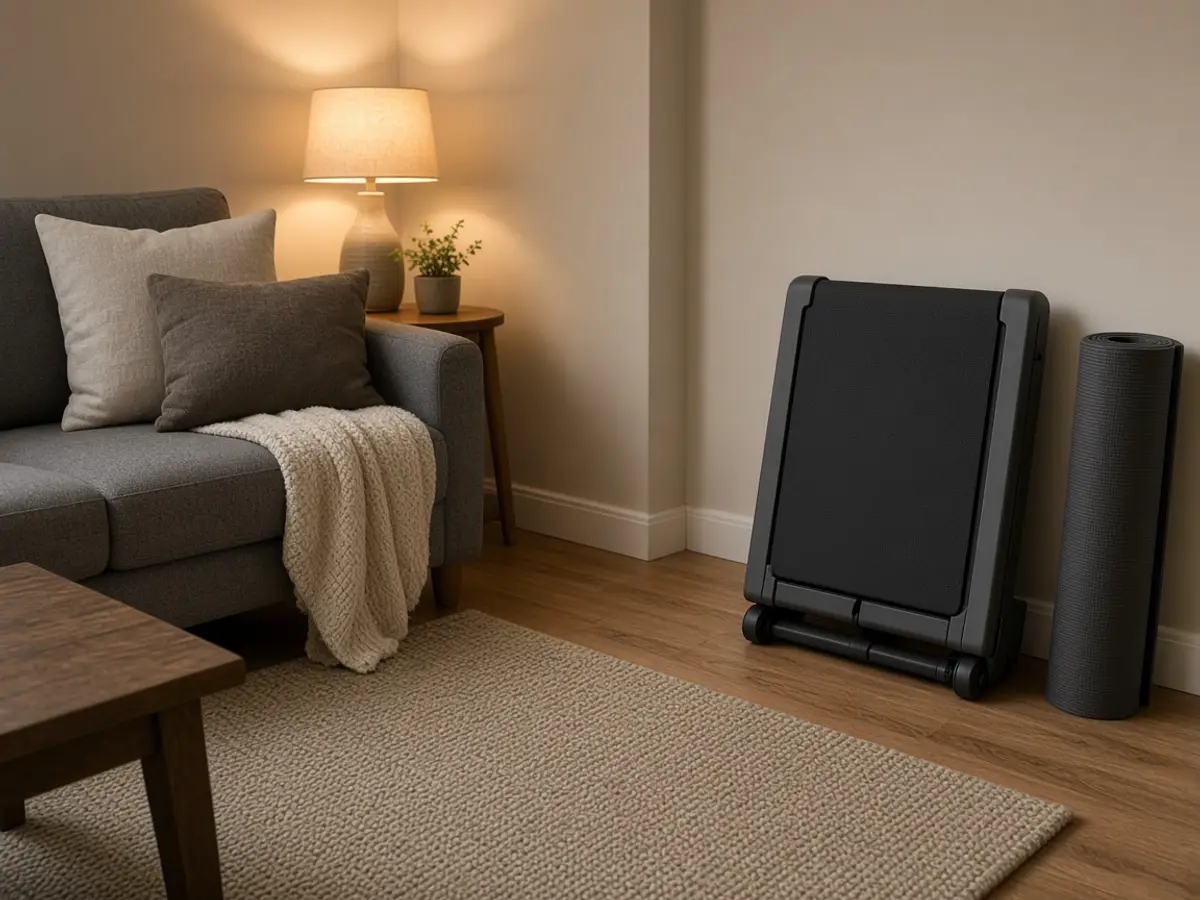
Both WalkingPad models fold 180° along their length, which makes them the most compact pads in this guide when stored. The P1 is the older design; the Z1 is the newer one.
| WalkingPad Z1 | WalkingPad P1 | |
|---|---|---|
| Speed range | 1–6 km/h | 0.5–6 km/h |
| Incline | None | None |
| Max user weight | 110 kg | 100 kg |
| Walking area | 121 × 40 cm deck (listed deck size) | 120 × 41.5 cm running board |
| Deck height | 10.6 cm | 12.9 cm (57 mm platform quoted) |
| Machine weight | 23 kg | 28 kg |
| Folded / stored size | 81 × 56 × 13.8 cm (folds in half) | 82.2 × 54.7 × 12.9 cm (folds in half) |
| Motor (as listed) | 2 HP, brushless (as listed) | 2 HP (as listed) |
| Handlebar | No | No |
| App / remote | Remote and app | Remote and KS Fit app |
| Warranty (as listed) | 1 year | 1 year |
| See on Amazon | See on Amazon |
Where the Z1 is better
- Weight limit: 110 kg vs 100 kg.
- Machine weight: 23 kg vs 28 kg, which matters when you fold and move it daily.
- Height: 10.6 cm vs 12.9 cm when flat.
- Motor: listed as brushless, with a noise claim of under 45 dB. The P1 gives no figure.
Where the P1 is better
- Automatic speed mode: the P1 can follow your pace, speeding up as you walk towards the front and slowing as you drop back.
- Slower minimum: 0.5 km/h, against 1 km/h.
What they share
- 1–6 km/h (0.5–6 for the P1), walking only.
- Long decks: 121 × 40 cm (Z1) and 120 × 41.5 cm (P1), the longest in this guide.
- Folded size around 81–82 × 55–56 cm.
- Remote and app.
- One-year warranty.
Who should choose which
WalkingPad Z1: most people, especially if you are over 90 kg, or will fold it often.
WalkingPad P1: a lighter user who likes the idea of automatic speed and does not need to move it often.
Neither: if you are over about 100 kg, choose a pad rated to 130 kg or more. See walking pads for heavier people.
Folding in practice
Both pads fold 180° along their length, so the walking surface folds onto itself. That halves the floor area but roughly doubles the thickness. The Z1 folds to 81 × 56 × 13.8 cm, and the P1 to 82.2 × 54.7 × 12.9 cm. Either will fit in many cupboards, behind a sofa or under a desk.
The difference in machine weight shows up most when folding and moving the pad every day. At 23 kg, the Z1 is still heavier than most flat pads here, so if you only need to slide a pad under a bed, a lighter flat model may be easier. See lightweight pads.
Desk use
Both have a long deck, which is good for walking naturally at a desk. The Z1 is lower when flat (10.6 cm against 12.9 cm), so it adds less to your standing desk height. The P1's 0.5 km/h minimum suits people who like to walk very slowly while working.
The P1's automatic speed mode is less useful at a desk, where you usually want a steady pace, and more useful for walks away from the desk.
If you are between the two limits
If you weigh around 95–100 kg, the P1 is too close to its 100 kg limit, and the Z1 leaves only a modest margin. A pad rated to 120 kg or more is the safer choice. The UREVO SpaceWalk Lite has a 100 × 40 cm belt and a 120 kg limit, and the UREVO S2 is rated to 136 kg.
Questions
Is the WalkingPad Z1 better than the P1?
For most people, yes: it is lighter, lower and rated to a higher weight.
Do both WalkingPads fold?
Yes, both fold in half along their length.
Which WalkingPad is best for tall people?
Both have long decks, at 120–121 cm.