Is a walking pad worth it?
As an Amazon Associate we earn from qualifying purchases. This does not change which products are recommended. Disclosure.
A walking pad is most worth it for people who sit for long periods at home, particularly home workers with a standing desk or room for one, because it turns calls and reading into walking time. It is less worth it if you already walk a lot, have no space to use it, or want to run.
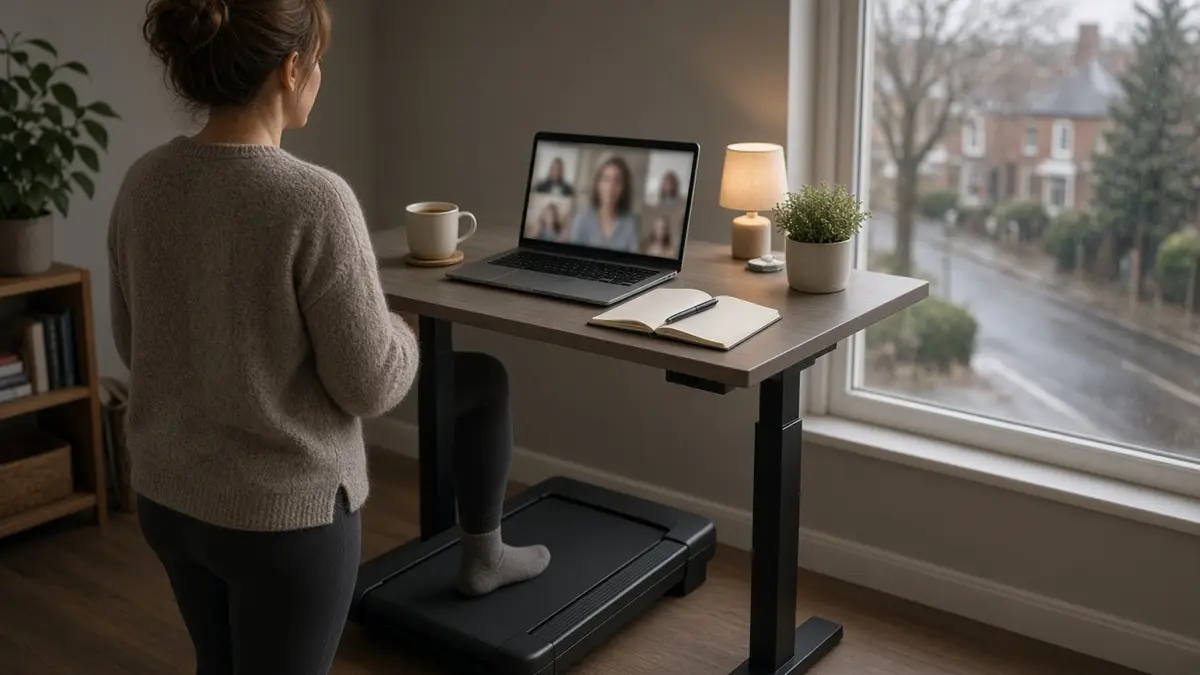
Walking pads are popular, especially as the January fitness rush approaches. Whether one is worth buying depends less on the model than on how you live.
It is likely to be worth it if
- You work from home and sit most of the day. A pad lets you walk through calls, reading and email.
- You have, or can get, a standing desk. Desk walking is where pads earn their place.
- Getting outside is difficult. Weather, darkness, safety, caring responsibilities or mobility can all make outdoor walking harder. A pad removes those barriers.
- You want gentle, regular movement rather than intense exercise.
It may not be worth it if
- You already walk a lot. The extra benefit is smaller.
- You do not have space to use it. You need the pad's length plus room behind it.
- You want to run. A treadmill is better. See walking pad vs treadmill.
- Noise would be a problem with neighbours below.
The practical downsides
- It has to live somewhere. See small spaces.
- Moving it. Pads weigh 13–28 kg.
- Maintenance. Belts need centring and lubricating.
- Getting used to it. Walking and working takes practice.
- Electricity. Small, but real. See running costs.
What it costs to own
Beyond the purchase price, a walking pad has a few ongoing costs:
- Electricity. Usually pence per hour at current UK prices. See running costs.
- A mat. Recommended, especially on carpet or upstairs.
- Lubricant. Most manufacturers specify one, and some include it.
- A standing desk, if you do not already have one and want to walk while working.
If you are unsure, check these first
Before buying, it is worth trying a simple test. For a week, stand at your desk, or stand during calls, for the time you imagine walking. If standing works for you, walking probably will too. If you find you sit down after ten minutes, a walking pad may end up under the bed.
Also measure:
- the floor space where you would use it (the pad plus about 50 cm behind);
- the gap under your bed or sofa, if that is where it would live;
- your standing desk's maximum height, if you have one.
Choosing the right type
If you decide a pad is worth it, the right type depends on how you will use it:
- Mostly at a desk: a low, flat pad with a 1 km/h minimum. See the standing desk guide.
- In a small home: a folding or very light pad. See small spaces.
- For harder walks: an incline. See incline pads.
- For walking and some jogging: a 2-in-1 with a handle. See handlebar pads.
Questions to ask yourself
- Where will I use it, and where will I store it?
- Will I use it at a desk, or for separate walks?
- Will I realistically use it most days?
- Who else in the household will use it?
A note on health claims
Walking is widely recommended as part of an active life, and the NHS suggests adults aim for at least 150 minutes of moderate activity a week. But this site does not make specific health claims for walking pads. If you have a health condition, talk to a GP or physiotherapist before starting a new exercise routine.
Questions
Do people actually use walking pads?
Some use them daily; others stop. Those who walk at a desk tend to use them most, because it fits into time they already spend.
Is a walking pad good for weight loss?
Walking uses energy, so it can help as part of an overall approach. This site does not make weight-loss claims.
Is a walking pad better than walking outside?
Outside offers fresh air and varied terrain. A pad offers convenience. Many people do both.