Using a walking pad on carpet or upstairs
As an Amazon Associate we earn from qualifying purchases. This does not change which products are recommended. Disclosure.
Yes, you can use a walking pad on carpet or upstairs, but put a firm, dense rubber mat underneath. It gives the pad a stable base, keeps carpet fibres away from the motor and belt, protects hard floors and reduces vibration travelling into the room below.
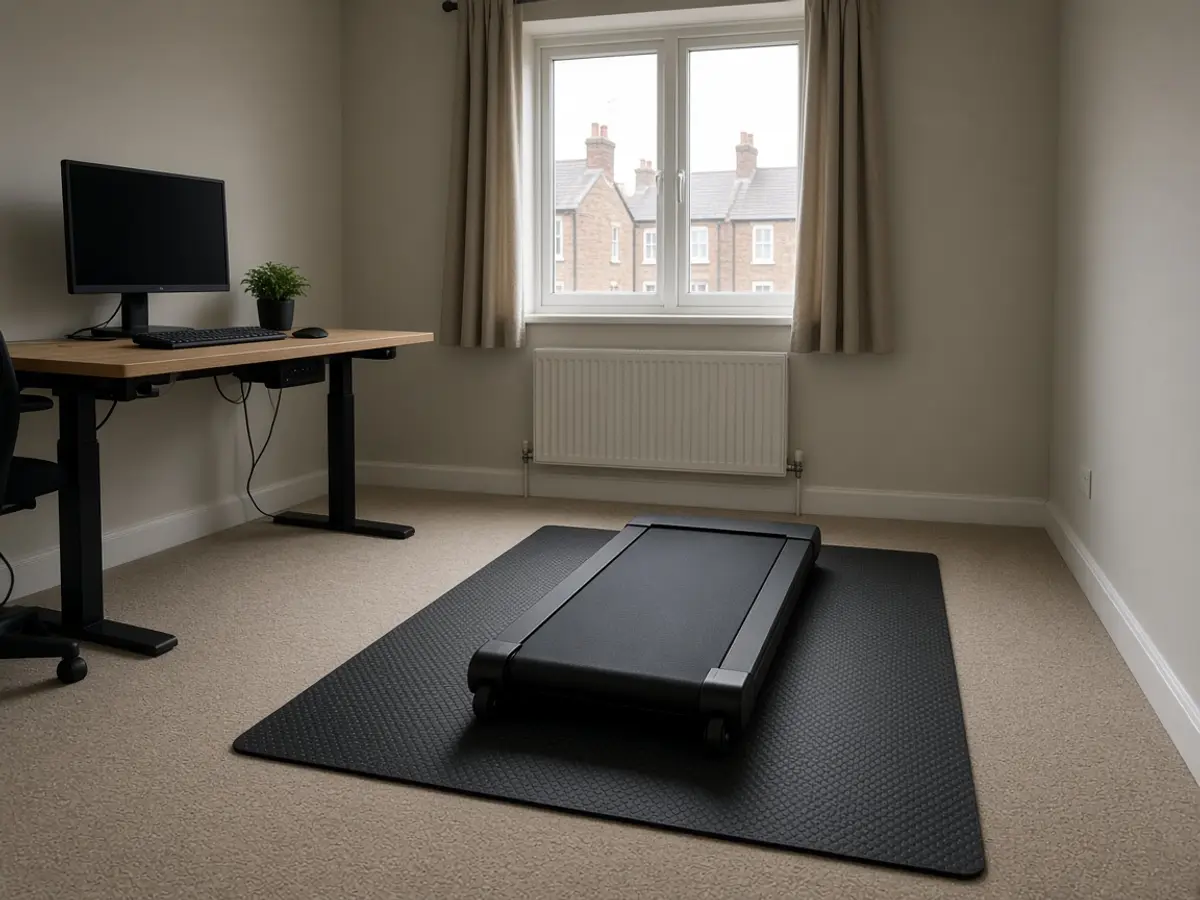
Most walking pads in UK homes end up on carpet or upstairs, often both. Neither is a problem, but both benefit from a mat.
On carpet
Carpet is soft and uneven. Without a mat:
- the pad can rock or sit at a slight angle;
- fibres and dust get drawn into the motor housing and under the belt;
- the underside vents can be partly blocked.
A dense rubber mat solves all three. Choose one at least as big as the pad's footprint, ideally a little bigger.
On laminate, wood or tiles
The concern here is the floor, not the pad. Rubber feet can mark some finishes, and vibration can rattle loose boards. A mat protects the floor and stops the pad from creeping.
Upstairs
Upstairs, noise is the issue. The motor is usually quiet, but each footstep sends a small impact into the floor. On suspended timber floors, common in UK houses and conversions, that can be heard below.
What helps most:
- A dense mat. Soft yoga mats are too thin. Look for a firm rubber equipment mat.
- Walking, not jogging. Impact rises sharply with speed.
- Placement. Near a wall or across joists is better than the middle of a room.
- A steady stride. Heavy heel strikes carry more.
The quiet pads guide has more on noise.
Leases and tenancies
Some leases and tenancy agreements restrict exercise equipment or noise. It is worth checking, and being considerate about the times you use it.
Choosing a mat
Not all mats are equal. What to look for:
- Material. Dense rubber or a firm PVC equipment mat. Foam puzzle tiles and yoga mats are too soft: the pad can sink and rock.
- Thickness. Thicker mats absorb more vibration, but the pad must still sit level and stable. A firm mat of several millimetres is a common choice.
- Size. At least the full footprint of the pad. The pads here range from about 104 × 47 cm (HomeFitnessCode A1) to about 143 cm long unfolded (WalkingPad Z1). Allow a little extra on each side.
- Grip. It should not slide on your floor.
Measure the pad's footprint from the listing before buying a mat. The storage height chart and each review list the dimensions.
Getting the pad level
A walking pad that sits unevenly can make the belt drift. After setting it up:
- Check that all the feet touch the mat.
- Run the belt slowly with nobody on it and watch whether it stays centred.
- If it drifts, see the maintenance guide for adjusting it.
On thick carpet, a firm mat matters more, because the pad can settle into the pile over time.
Electrical safety
Walking pads draw more power than most household devices. Plug yours directly into a wall socket rather than an extension lead where possible, keep the cable out of the walking area, and do not run it under a rug where it could be damaged. Unplug it when you are not using it.
Moving it between rooms
If you use the pad in one room and store it in another, check thresholds, door widths and stairs. Rolling a pad over a raised threshold can jolt it; lifting is safer. The lightweight pads guide covers moving a pad safely.
Questions
Do I need a mat for a walking pad?
It is not essential on a hard, level floor, but it is a good idea, and strongly recommended on carpet or upstairs.
Will a walking pad damage my carpet?
It can flatten the pile over time. A mat spreads the load.
Can you use a walking pad on a first-floor flat?
Yes. Use a mat, walk rather than jog and consider your neighbours.